Image
Gallery showing 1 of 1 images
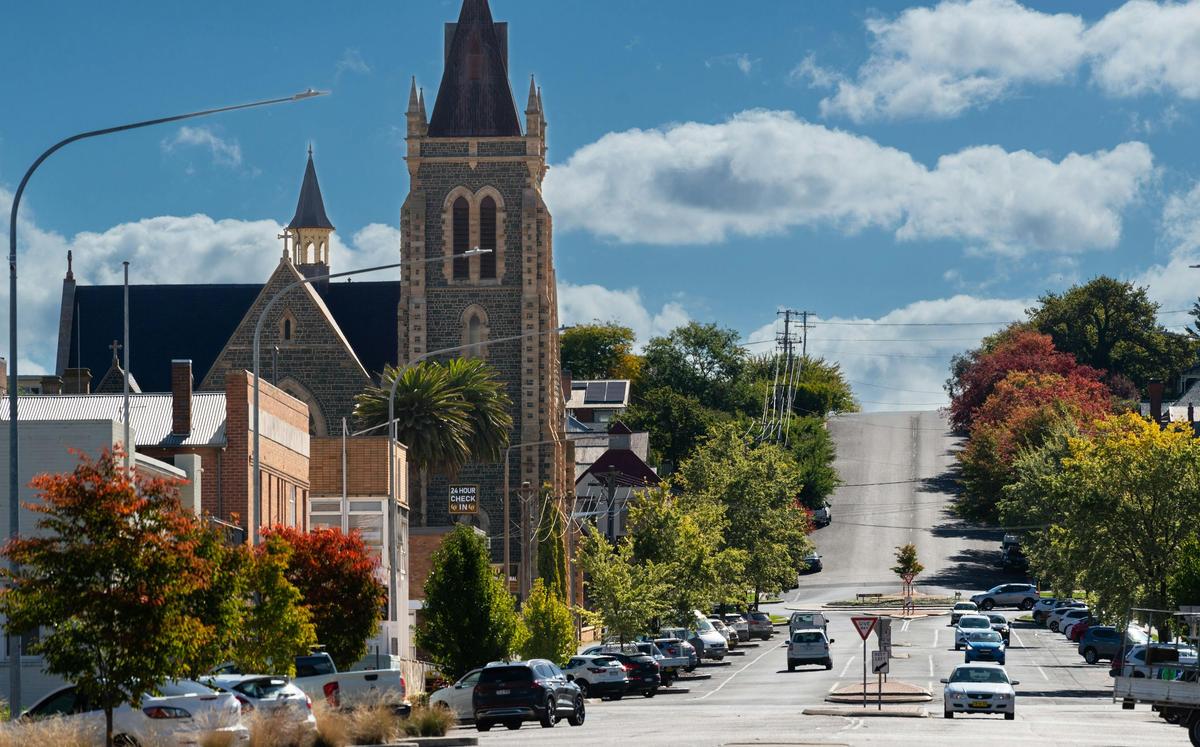
139 Auburn Street
Goulburn NSW 2580
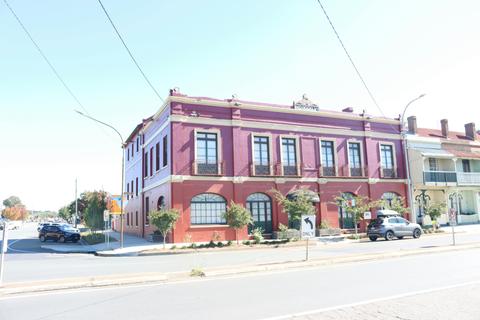
The starting point for the Self-Guided Heritage Tour of Goulburn is Mandelson's of Goulburn. Mandelson's of Goulburn* was built in 1839; originally as the Goulburn Hotel, it was later renamed after its owner Nathan Mandelson. Mandelson's Hotel was once regarded as the best accommodation outside of Sydney. It was in Mandelson's Ballroom where local businessmen met to establish the Sydney Railway Co. The building was home to the first Telegraph Station, as well as the first to be lit by gas in Goulburn. You will walk along Sloane Street towards Belmore Park with the first stop being the Southern Railway Hotel. Built by James Clifford in 1869 the Southern Railway Hotel (1869) is one of the original 73 inns* in Goulburn that has maintained much of its old-world charm. The balcony over the footpath is also one of the few original verandas still remaining in the City. From here you will cross Sloane Street to visit the Goulburn Railway Station. The railways were of enormous importance to Goulburn.* They provided employment to our early residents and a safe, comfortable option for transportation to Sydney. The foundation stone of the Railway Station was laid on 12 May 1868 and the line was officially opened just over a year later. Since then, only minimal alterations have been made to the building. You then cross back over Sloane Street making your way further to the next stop, the Alpine Heritage Motel. The Alpine Heritage Motel survives as the old accommodation wing of the Goulburn Coffee Palace, a hotel that did not serve alcohol. Coffee Palaces were built across the country as part of the temperance movement, encouraging people to abstain from alcohol. From here you will continue onto the Argyle Emporium. The building that houses the Argyle Emporium was Goulburn's old Police Station. Inside, the original gaol cells remain. Due to Goulburn's rapid growth in the 1870s, this building proved inadequate, so the third and current courthouse was built.

Heading back down Auburn Street towards Belmore Park you are making your way to the site of the old Knowlmen's Department Store. On the corner of Auburn and Market Street is the site where Knowlman's Department Store once stood. It was opened in 1888 as a branch of its London-based company, with 18-year-old John Knowlman at the helm. Knowlman's Store was the go-to store at the time for imported goods, with direct instructions from the London factories to send out new goods to the Goulburn store the moment fashions were created. John Knowlman was Mayor from 1899-1900 while the business continued under the direction of his son, John Edward Knowlman. Knowlman's ceased trading in 1982. The building itself remained: leased first to Donahue's Hardware, then to Clint's Crazy Bargains, both of which adjoined Bryant's Bakery. Just down the road you will see the Fireside Inn (1934), built by J.E. Knowlman, reminiscent of his travels through England. Unfortunately, the Knowlman's Store building burnt down in 1999 due to a fire in the bakery. Today, of the original buildings, only the Fireside Inn remains.
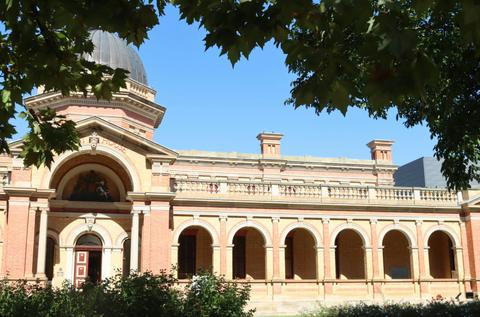
From the Argyle Empoium you will continue along sloane street, turning left onto Montague Street with the next stop being the Courthouse. The Courthouse was designed by James Barnet and opened in 1887 at a cost of £24,593 (around $3.4m today). The Victorian Italianate styled building was touted as one of the most beautiful buildings in "all of Her Majesty's dominions" by the Chief of Justice of the Colonies. The building is still very much in use today, holding sessions of Local, District and Supreme Court. Continuing along Montague Street you will see the old Mechanics Institute Technical School which now houses Cafe 5911. The building where Roses Café is located was originally built as the Technical School building of the Mechanics Institute. It opened in 1889, behind the City's Library which is now occupied by NAB bank. The Library (1860) also had a museum, conducted lectures, classes, held debating discussions, exhibitions and later technical classes for its subscribers who paid just a shilling a month.
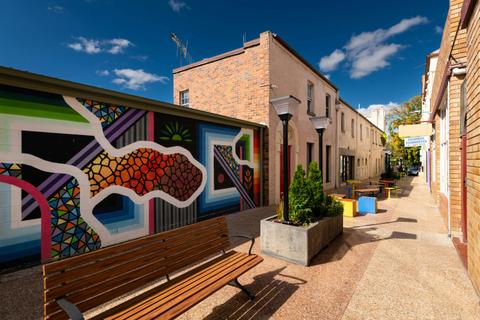
Continue down Montague Street and at the traffic lights, continue the tour along Auburn Street. The AMP Building (1928) was designed by Wright and Appleby Architects. The building is an example of neoclassical Italianate, commercial architecture. Three solid cedar doors and thin Flemishbond brickwork give this building an interesting fac;:ade. The Goddess of Peace and Plenty adorns the top of the building and is by WP McIntosh. The Latin inscription means "a certain friend in uncertainty''. Next door is The Goulburn Post building (now housing Ray White Goulburn) has been restored to the original 1935 look from an old photograph. The Goulburn Herald was one of Australia's first country newspapers, later incorporated into the 'Goulburn Evening Penny Post'. It was then renamed to the Gou I burn Evening Post during the war when the cost rose higher than a penny. The last afternoon print was in October 1977. Today the paper is still published, as the Goulburn Post. Then on the opposite corner In 1875 on the corner of Clifford and Auburn Streets a building once stood owned by MrT.N. Jacob, a saddler. Mr Jacob installed a life-size wooden white horse on top of his saddlery to increase his sales. After closing down, the building was licensed to Tom Jacob, establishing the White Horse Hotel (1885). Unfortunately, in 1910 it was among a number of hotels de-licensed as a result of the "reduction" vote in the liquor referendum and was closed a year later. The premises was renovated to be occupied by various banks until the 1930s when it was demolished. The Colonial Mutual Life Building (1933), designed by architects Hennessy & Hennessy, was built in its place. Colonial Mutual Life operated here until the office closed in 1979. The site then enjoyed a stint as a local radio station's studio.
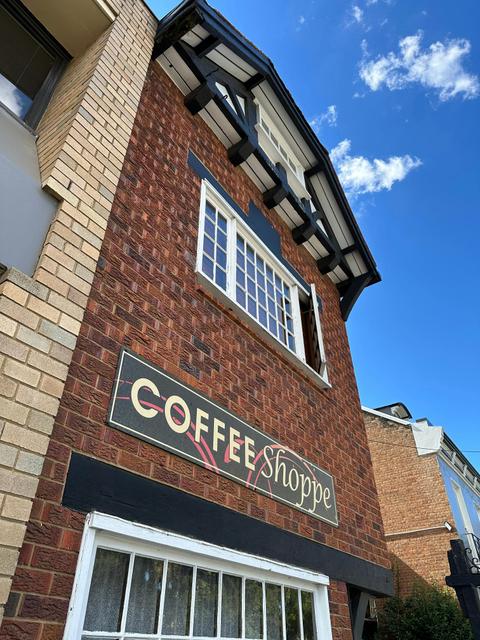
From the Old Knowleman's Department Store site you will walk down Montague Street back towards the Goulburn Visitor Information Centre. Next door is a Victorian terrace townhouse with an attic, built for a local merchant during the 1860s. Neighbouring, is the Goulburn Club (1848), which was once the Medical Hall. It was here that Dr Waugh invented and manufactured his famous baking powder. In 2003 the veranda was built to the original plans drawn by EC Manfred (c.1904). To the right of the Goulburn Club is a Stone Archway which once led to the Bull & Woodward stores and warehouses at the rear. The memory of the early storekeepers is kept alive with their initials 'B & W' decorated in the keystone. Cross Market Street into the centre of Belmore Park via the Honour Roll. Belmore Park was originally the town's Market Square. It was once surrounded by a white picket fence, and here residents could sell their livestock, farm produce and merchandise. The park became a botanical garden, and for 16 years it had a small zoo with emus, deer, peacocks and kangaroos. The park was named Belmore after Lord and Lady Belmore, who planted the oak tree in the centre of the park in honour of the Railway opening in Goulburn in 1869.
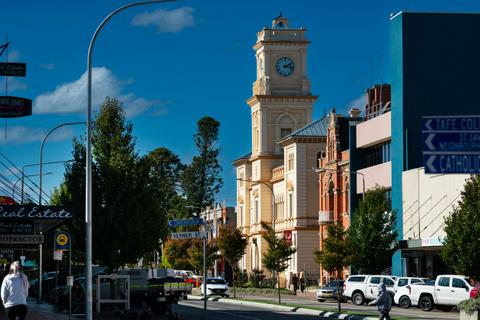
From the Old Mechanics Institute Technical School, continue along Montague Street and turn left onto Auburn Street. Across Auburn Street stands the Rogers Building (1853), now occupied by Dimmey's and Harvey Norman. Originally built for Jones & Co. as a large country emporium, it was later refurbished by Furner & Jones before being sold in 1901 to Rogers & Sons. Your first stop on Auburn Street is the Post Office (1880), designed by James Barnet and built by Mr. F. Horn. The building features a central arch bearing Queen Victoria's head, once used by horse and coach to access the rear yard. The 30-metre-high clock tower was added a year later due to public demand and was originally lit by gas. The clock's bell had been silent for over 20 years until a visiting enthusiast managed to restore the chimes in 2010. Adjacent to the Post Office is the Old Town Hall, now the Goulburn Performing Arts Centre. Designed by EC Manfred and built by William Wilkie for £3,425, it opened in 1889. A classical revival structure, it served as Goulburn's local government offices for 99 years and now functions as a community services building. Further down Auburn Street is the Hibernian Hotel, one of Goulburn's original pubs, first licensed on 6 July 1850. In 1871, Dr. William Foxley Hayley briefly used it as his dispensary before it reopened as the Hibernian Hotel in 1880. It has operated continuously since. At the corner of Auburn and Verner Streets stands the site of Goulburn's first bank, the Commercial Banking Co. of Sydney, established in 1837. Closed in 1844 along with all country branches, it reopened a decade later, and a new building was constructed six years after that. Originally featuring verandas and balconies, it was remodelled in 1919. The granite pillars at the main entrance were sourced from a Marulan quarry.